From Rice Paddies to National Symbol
Paella's story begins not with a recipe, but with a grain. When the Moors conquered the Iberian Peninsula, they brought rice cultivation techniques and planted the grain in the wetlands around Valencia's Albufera lagoon as early as the 8th century. The Spanish word for rice — arroz — is Arabic in origin, not Latin, a linguistic fingerprint of this cultural inheritance. Saffron, that other defining ingredient, arrived via the same Arab trade routes around the 10th century.
The dish we recognize as paella coalesced in the mid-19th century among rice farmers and laborers working the paddies around the Albufera de València. These workers cooked one-pot meals in wide, shallow pans over open wood fires, combining rice with whatever was at hand — snails, aquatic birds, green beans, tomatoes, and water from the lagoon. The name "paella" itself simply means "pan" in Valencian and Catalan, derived from the Latin patella. In 1840, a Valencian newspaper first used the word to refer to the dish rather than the vessel — the moment a cooking implement became a culinary identity.
An important and sometimes overlooked ingredient in the earliest paellas was water vole (rata de agua), along with eel and butter beans — creatures that thrived in the Albufera wetlands. Novelist Vicente Blasco Ibáñez described this tradition in his 1902 novel Cañas y barro. These were true field dishes: communal, eaten directly from the pan with wooden spoons, cooked over fires of dried orange tree branches and vine cuttings whose smoke became an ingredient itself.
The Major Evolutionary Shifts
Paella has undergone several identifiable transformations since its humble origins. Each shift reflects changes in economy, geography, and culture — and each left a distinct flavor imprint on the dish.
1. The Peasant Era — "Forager's Rice"
- Proteins: Snails, water voles, eels, aquatic birds, occasionally rabbit or duck
- Vegetables: Green beans, butter beans, tomatoes
- Technique: Open fire, communal eating from the pan
- Character: Earthy, lean, smoky, utilitarian
2. The Valencian Codification — "Land & Hearth"
- Proteins: Rabbit, chicken, duck, snails (optional)
- Additions: Three types of beans (garrofó, ferraura, tavella), artichokes in winter, fresh rosemary, sweet paprika, saffron
- Character: Robust, herbal, deeply savory — the "canonical" paella Valenciana as we know it
- This is the recipe that Valencians fiercely defend as the only true paella
3. The Coastal Pivot — "Seafood"
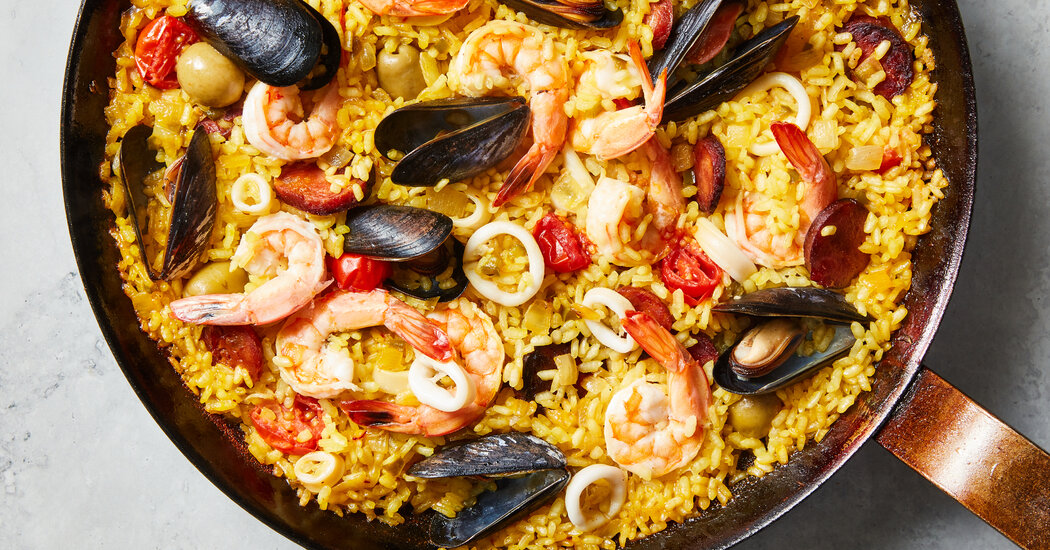
- Proteins: Shrimp, mussels, clams, squid, cuttlefish, various fish
- Key change: Fish stock (fumet) replaces water; beans and rosemary are dropped
- Character: Briny, oceanic, lighter but intensely flavored from shellfish
- Related dishes like arròs a banda and arròs del senyoret emerge from Alicante's fishing communities
4. The Baroque Fusion — "Mixed / Mixta"
- Proteins: Chicken and shrimp, rabbit and mussels
- Character: Rich, crowded — sometimes called preparación barroca by Valencians (not a compliment)
5. The Tourist Boom — "International Spectacle"
- Key changes: Cooking moves indoors; wood fire abandoned; chorizo, lobster, bell peppers, peas, and other non-traditional ingredients creep in
- Character: Colorful, photogenic, often lighter and less complex
- Valencians coined arroz con cosas — "rice with things" — for these freewheeling interpretations
6. The Modern Revival — "Technique-Forward"
- Key changes: Chefs champion wood-fire cooking, artisanal bomba rice, handmade fumet, and proper socarrat technique
- Character: Darker, richer, smokier — a conscious return to roots with modern precision
- Interest in heirloom varieties like senia and albufera rice
The Paella Framework — What Makes It Paella?
With over 200 distinct rice dishes from Valencia alone, it's worth defining what separates a paella from a risotto, a pilaf, an arròs a banda, or generic "rice with things." These are the non-negotiable pillars:
The Pan (La Paellera)
A wide, shallow pan — traditionally carbon steel with two handles. The extreme width-to-depth ratio ensures the rice cooks in a thin, even layer (1–1.5 cm deep), maximizing surface area for flavor absorption and socarrat formation. A deep pot makes something else entirely.
The Rice
Short-grain Spanish rice — ideally bomba (absorbs three times its volume without bursting) or senia/bahia varieties. Grains must remain individual, separate, and firm — never creamy like risotto, never sticky. Arborio is a poor substitute.
The Sofrito
Every paella begins with vegetables (at minimum grated tomato and garlic) cooked slowly in olive oil until deeply caramelized. This is the flavor engine — cook until there's almost no steam, meaning only pure concentrated flavor remains.
Saffron and/or Pimentón
Saffron provides golden color and floral, earthy depth. Sweet smoked paprika (Pimentón de la Vera) adds warmth and smokiness. Together they form the aromatic signature.
The No-Stir Rule
Once the rice enters the liquid, you never stir it. Stirring releases starch and creates risotto-like creaminess — the exact opposite of what paella demands. This is the single most important technical distinction.
Socarrat
The prized caramelized crust on the pan bottom, achieved by a final burst of high heat. It's Maillard reaction and sugar caramelization — not burning. It captures the concentrated essence of sofrito and stock. Many Valencians consider it the best part.
Open Cooking (No Lid)
Traditional paella is cooked uncovered, allowing steam to escape so the rice develops properly. Covering it traps moisture and steams the rice instead of toasting it.
What Paella Is Not
| Feature | Paella | Risotto | Pilaf | Arròs a Banda |
|---|---|---|---|---|
| Pan | Wide, shallow paellera | Standard pot | Pot with lid | Paellera |
| Starch Release | Minimal (no stirring) | Maximized (constant stir) | Minimal | Minimal |
| Texture | Dry, separate grains | Creamy, flowing | Fluffy, separate | Dry, separate |
| Liquid | All at once | Gradually, ladle by ladle | All at once | All at once |
| Crust | Socarrat (desired) | None | Tahdig in Persian | Socarrat |
| Protein | Cooked with rice | Usually none | Varies | Served separately |
Seafood Paella (Paella de Marisco)
A complex, layered recipe built on three foundations: homemade fumet, deeply caramelized sofrito, and properly handled bomba rice. Serves 4.
Part 1: The Fumet (Seafood Stock)
Make this first — ideally a day ahead. This is the soul of the dish.
Fumet Ingredients
- Shells & heads from 1 lb shell-on shrimp (reserved from main recipe)
- 1 lb fish bones/heads (monkfish, sea bass, or any white fish — avoid oily fish)
- 3 tbsp extra virgin olive oil
- 1 small onion, roughly chopped
- 1 small carrot, roughly chopped
- 1 celery stalk, roughly chopped
- 3 garlic cloves, smashed
- ½ cup dry white wine
- 1 bay leaf · 5–6 black peppercorns · parsley stems
- 7 cups cold water · pinch of salt
Roast the shells
Dry-roast the shrimp shells and heads in a hot pan for 3–4 minutes until they turn deep red and fragrant. This is the single biggest flavor amplifier — the toasted shells release an intense crustacean aroma.
Sweat the aromatics
In a stockpot, heat olive oil over medium heat. Sauté the onion, carrot, celery, and garlic gently for 8–10 minutes until soft and golden.
Build and simmer
Add the roasted shells and fish bones. Stir 2 minutes. Deglaze with wine, scraping the bottom. Let reduce by half. Add water, bay leaf, peppercorns, and parsley stems. Simmer gently for 30–35 minutes (never a rolling boil — that makes stock cloudy). Skim any foam.
Strain
Strain through a fine-mesh sieve, pressing the solids to extract every drop. You should have about 5–6 cups of rich, golden stock.
Part 2: The Paella — Ingredients
Use a 15–16 inch carbon steel or enameled steel paella pan. Widest, shallowest skillet you own works too (not nonstick).
Rice & Seasoning
- 320g (~1½ cups) bomba rice
- ~0.5g saffron threads (25–30 threads)
- 1 tsp sweet smoked paprika (Pimentón de la Vera dulce)
- Fine sea salt
Seafood
- 1 lb large shrimp, shell-on (peel, save shells for fumet)
- 12 mussels, scrubbed & debearded
- 12 littleneck clams, scrubbed
- 2 whole squid, rings + tentacles
- 4 langoustines (optional, for presentation)
Sofrito
- ¼ cup extra virgin olive oil
- 4 garlic cloves, minced
- 1 small onion, very finely diced
- 2 ripe Roma tomatoes, grated (discard skins)
- 1 red bell pepper, finely diced (optional)
- 2 dried ñora peppers, soaked & scraped — or extra ½ tsp pimentón
To Finish
- 5 cups hot fumet (from Part 1)
- Lemon wedges
- Flat-leaf parsley, chopped (optional)
Part 3: The Cook
Bloom the saffron
Toast saffron threads in a dry pan over low heat for 30–60 seconds until fragrant and slightly darker. Crumble into ½ cup of hot fumet and let steep while you work. This extracts maximum color, aroma, and flavor.
Sear the seafood — build the flavor base
Heat 2 tablespoons olive oil over high heat until shimmering. Sear shrimp ~1 minute per side until just pink (not cooked through). Remove. Sear squid rings and tentacles 60–90 seconds. Remove. Sear langoustines 2 minutes per side if using. Remove. The fond in the pan is liquid gold.
Build the sofrito — the most important step
Add remaining olive oil, lower to medium. Cook onion and bell pepper 5–6 minutes until softened. Add garlic and ñora flesh (or extra pimentón) — stir 1 minute.
Add grated tomato. Now: cook it down until it goes from wet and orange to a dark, jammy, brick-red paste — about 6–8 minutes. You're looking for almost no steam rising. This deep reduction is what separates a great paella from a mediocre one.
Stir in smoked paprika. Cook 30 seconds — just long enough to bloom the oils, not burn.
Add liquid and bring to a boil
Pour in the remaining ~4.5 cups of hot fumet and the saffron-infused liquid. Scrape up all fond. Taste the broth — it should be richly flavored and well-seasoned. Adjust salt now, because once the rice goes in, the seasoning is locked. Bring to a strong, rolling boil.
Add the rice — the critical moment
Sprinkle bomba rice evenly across the pan (some cooks pour in an X pattern). Give one gentle shake to level, then do not touch it with a spoon again. The liquid should cover the rice by about 1 cm. The rice layer should be no more than 1.5 cm thick.
Cook the rice — 18 minutes of patience
Minutes 1–10: Medium-high heat. Vigorous simmer. You can rotate the pan for even heat, but don't stir.
Minutes 10–15: Reduce to medium. Liquid drops below rice surface. If it looks dangerously dry before the rice is tender, add a few tablespoons of hot fumet.
Minutes 13–14: Nestle clams and mussels hinge-side down into the rice. Place reserved shrimp and squid on top — they'll finish in the residual heat.
The socarrat — 2 to 3 final minutes
When the rice is tender with a slight bite and liquid is absorbed, crank to high for 2–3 minutes. Listen for a faint crackling. Smell for toasting rice sugars — warm, nutty caramel. Check by lifting the edge with a fork: golden-brown crust, not black.
Rest and serve
Remove from heat. Drape a clean kitchen towel (not foil — don't trap steam). Rest 5 minutes. Serve from the pan with lemon wedges. Eat from the outside in. The socarrat at the bottom is the prize — scrape it up and share it.
Flavor Profile Breakdown
| Layer | Source | Contribution |
|---|---|---|
| Brine & Umami | Fumet (shrimp shells, fish bones) | Deep oceanic backbone, collagen body |
| Sweetness | Long-cooked sofrito (onion, tomato, ñora) | Caramelized sugars, jammy depth |
| Smoke | Pimentón de la Vera | Warm, rounded oakwood smokiness |
| Floral / Earthy | Saffron | Aromatic complexity, golden color |
| Fond / Maillard | Seared seafood, socarrat | Nutty, toasty, caramel notes |
| Brightness | Lemon wedges at the table | Cuts richness, lifts all other flavors |
| Texture Contrast | Socarrat vs. tender rice vs. plump shellfish | The whole reason people love paella |
Tips for Your Home Kitchen
🍳 No paella pan?
A 15-inch cast iron skillet works. The key is width, not material. You need that thin rice layer.
🔥 No wood fire?
Replicate smokiness three ways: pimentón in the sofrito, a sprig of rosemary on top for the last 10 minutes (then removed), and a charcoal grill if you have one.
📐 Rice-to-liquid ratio
For bomba: roughly 1 part rice to 3–3.5 parts liquid by volume. Bomba is forgiving. If using senia or calasparra, reduce liquid slightly.
🚫 The biggest mistake
Stirring the rice. It releases starch and turns your paella into risotto. Resist the urge completely.
🦐 The second biggest
Overcrowding with too much seafood. The star is the rice, not the toppings. Flavors should be in the grains.
⏱️ Fumet shortcut
Buy jarred Spanish fish fumet (El Navarrico is solid) and enrich it by simmering your shrimp shells in it for 15 minutes.